

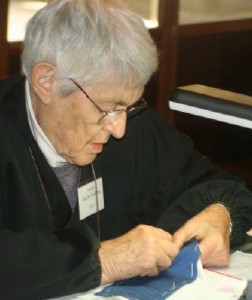
Zenkei Blanche Hartman sewing zokin zashi stitches on one piece at Green Gulch Farm. Below, two samples of stitching, upper, a straight offset pattern; lower, in waves.


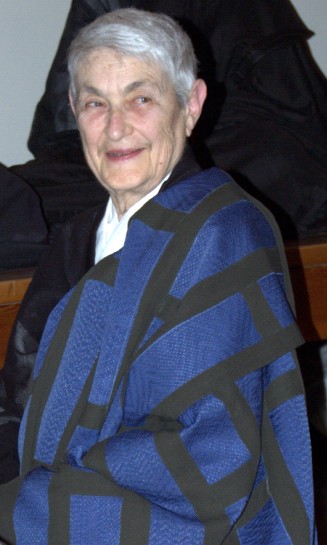
Zenkei Blanche Hartman

Great Ocean Robe

In 2007, Yuko Okumura wanted to bring people together to further understand the meaning of Buddha’s Robe and to honor Blanche Hartman’s contributions to sewing Buddha’s Robe. Together with Jean Selkirk, they planned for a 21-panel robe of 105 pieces, drawing from the traditional methods and rules of construction for robes of used/donated cloth.
As traditionally a teacher might receive a robe of 60 pieces for their 60th birthday, the idea of using 105 pieces in this robe was to wish Blanche long life.
The number of people involved increased as the sewing began, finally including as many people as pieces in the robe, across the USA and including international participants. Two sewing sesshins were scheduled: the first at Green Gulch Farm, where speakers would also come in to talk about Buddha’s Robe. The second held at Berkeley Zen Center for the final steps and to present the robe.
Yuko and Jean together composed the directions, decided on the thread color to be ordered from Japan (2000 meters of thread were needed). Other materials were selected such as the fabric for the rice field pattern applique and borders. The pieces were cut out and made up into packets to send to sewing teachers.
People met in small groups before the first sesshin to learn how to sew the layers together. Then, at the first sesshin in June 2008, all of the pieces were joined and the rice field pattern applique added. Finally, at the last sesshin in July 2008, the borders and zagu were finished, the envelope made, and after a celebratory dinner, the robe presenting ceremony was held.
Dogen zenji writes in Shobogenzo Kesakudoku: “We should simply use pure material offered by donors. We should use pure material donated by human and heavenly beings. We can make kashaya (Skt. robe) with the material exchanged at a marketplace with things obtained from pure livelihood. These discarded rags [funzo] and material obtained through pure livelihood are neither silk nor cotton. These materials are not gold, silver, pearl or jewel, twill cloth or thin silk, or golden brocade and so on, but are simply funzo-e [“e” is “robe”]. Kashaya made of discarded rags is neither for the sake of wearing humble robes nor for the sake of wearing beautiful clothes. It is only for the sake of buddhadharma. To wear it is nothing other than to authentically transmit the skin, flesh, bone and marrow of all buddhas in the three times. It is nothing other than correctly transmitting True Dharma Eye Treasury. Questions about this virtue should not be directed to human and heavenly beings. Rather we should study it from buddhas and ancestors.”
Japanese sewing teacher Okamoto-sensei explains: When we sew funzo-e, the most important thing we should consider is how to choose the material. In the time of Shakyamuni . . . they picked up the pieces of discarded fabric from grave yards and streets, cut out only usable parts, washed them seven times, died them in ‘broken color’ (dark, muted color) and used them to make okesa. In modern Japan, though you rarely see discarded fabric on grave yards or streets, many people keep used kimonos from old generations in their closet. Some of those are to preserve the memory of deceased ones, and the others are just simply forgotten and became useless without people’s attachment. Thus those used kimonos are suitable to be used as the materials of funzo-e.
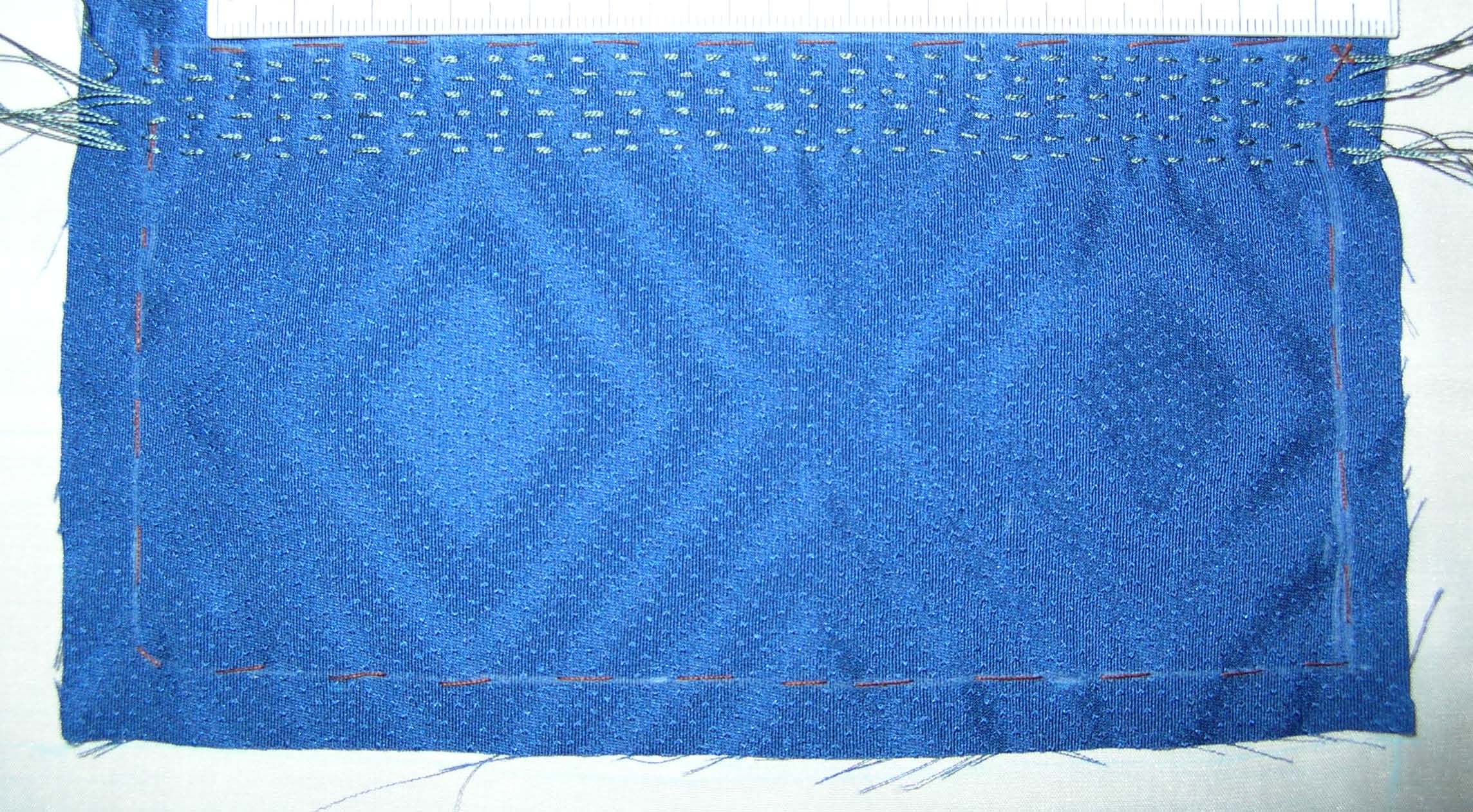
To right: One piece of the kimono fabric used, basted to the middle layer of discarded silk fabric (viewed horizontally). The first lines of zokin zashi (cleaning cloth) stitch are added at the top. These both hold the top layer to the middle one, strengthen, and also “transmute” the pattern in the fabric. (Note: thread ends are usually left hanging on the back).
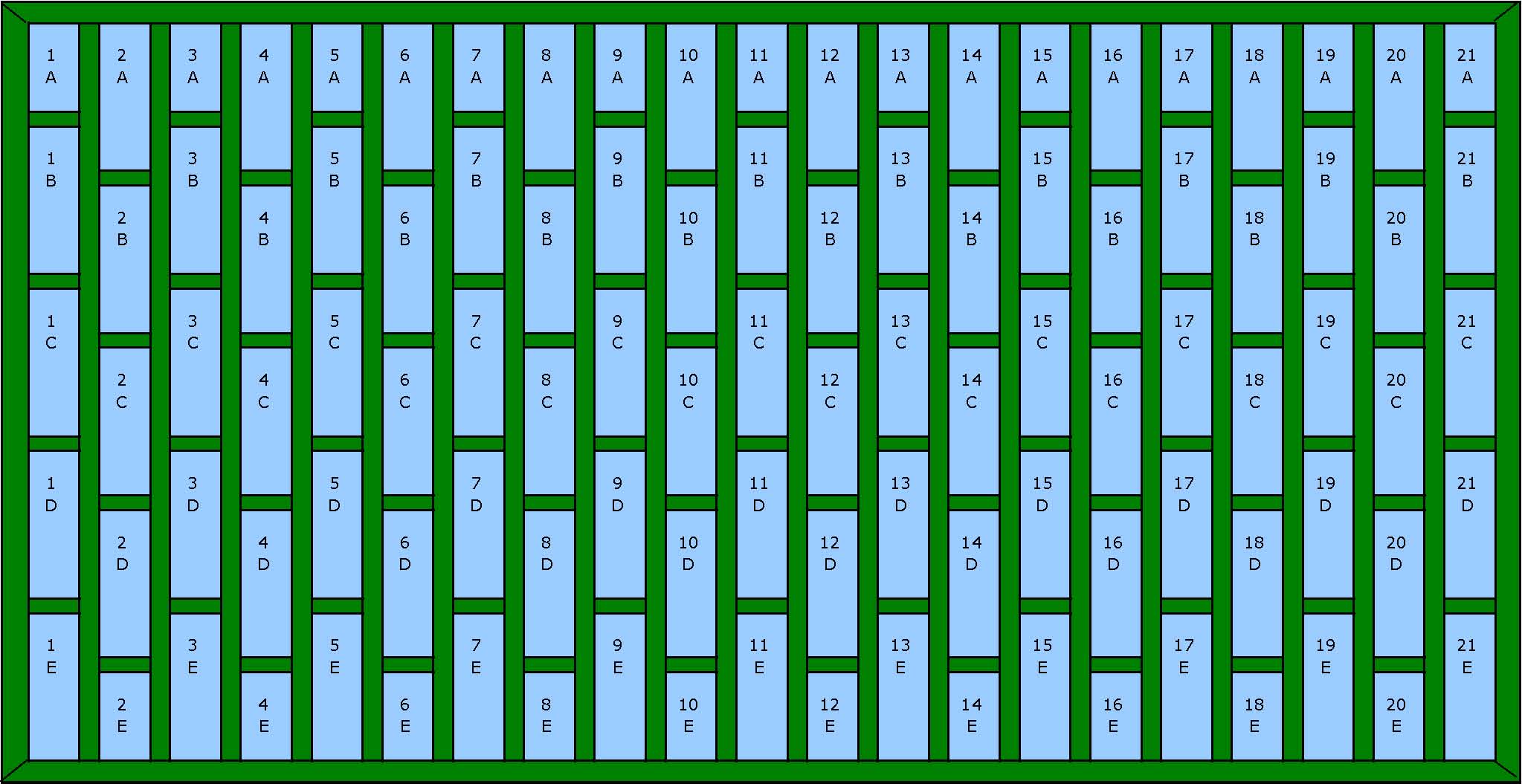
25 panels across: each panel made from one short and four long pieces.
© 2026 Zen Buddhist Sewing Teachers